Discover the Seal of Sustainable Adventures From Calafate Tours, our small commitment to caring for the environment
At Calafate Tours, we believe that adventures can be both exciting and responsible. That's why we promote environmental stewardship by developing tourism experiences that respect and protect the natural environment. This distinction represents our belief that every action, no matter how small, is a step towards the future. We strive to encourage responsible practices and motivate tour operators to continuously improve their processes, contributing to a more conscious and sustainable tourism industry.
This is just the beginning, and we're depending on you!
What makes the Sustainable Adventure Seal special?
By choosing activities certified with this seal, you are participating in experiences designed to minimize environmental impact and maximize your connection with nature. We encourage tour operators to follow strict sustainability standards, helping them implement improvements that benefit both the environment and visitors.
Requirements to obtain the Seal
For Calafate Tours to publish and promote an excursion as an environmentally friendly activity, it must meet the following criteria:
Low Carbon Emissions
The tour must minimize its carbon footprint, prioritizing practices and technologies that minimize environmental impact.
Zero-Emission Mainstream Transportation
Activities must utilize carbon-neutral means of transport, such as bicycles, hiking, or kayaking. Conventional transport is permitted only to take participants from the village to the starting point of the excursion, with a maximum distance of 30 km.
Nature-Based Activities
All experiences should focus on connecting with the natural environment, respecting local ecosystems and their capacity to receive visitors.
Use of Sustainable Resources
It is mandatory to implement practices such as waste separation and avoiding the use of disposable materials, promoting responsible consumption and recycling.
Commitment to Conservation
Activities should include initiatives that support local conservation and environmental education, promoting awareness among visitors and the community.
Our Commitment to You
By joining our Sustainable Adventures, you are not only enjoying unique and authentic experiences, but you are also contributing to the preservation of the natural landscapes that make this place an extraordinary destination.
Travel. Breathe. Connect. And leave only your footprints.
Discover our certified activities and be part of a new way of exploring the world, with respect and gratitude towards the environment.
How does CO2 influence deglaciation?
Greenhouse effect:
Carbon dioxide (CO2) It is one of the main gases responsible for the greenhouse effect. As its atmospheric concentration increases, measured in parts per million (ppm), More solar energy is trapped instead of being reflected back into space. This causes a rise in global temperature, which directly impacts glaciers, accelerating their melting and contributing to the loss of glacial mass.
Effect on the cryosphere:
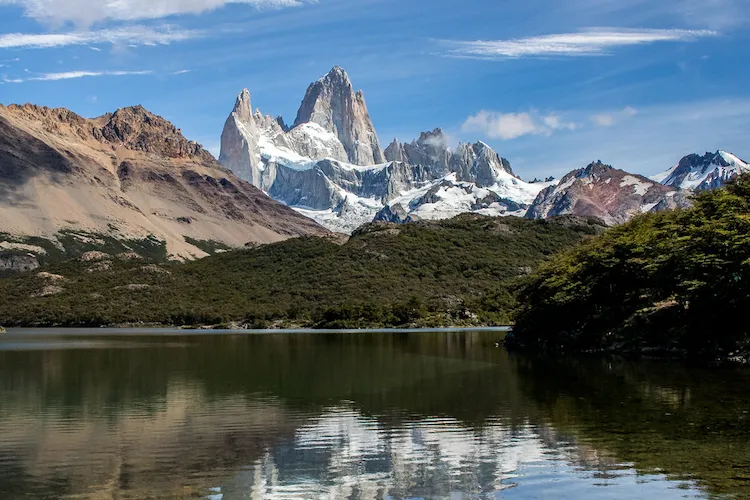
Glaciers, like those of Los Glaciares National Park In Patagonia, these ecosystems are extremely sensitive to temperature changes. A sustained increase in CO2, which currently exceeds 420 ppm in the atmosphere, is correlated with an increase in global temperatures, reducing the glaciers' ability to remain stable. These ecosystems depend on a thermal balance that the increase in CO2 levels is drastically altering.
Ratio per ppm of CO2:
- An increase of 1 ppm of CO2 can cause an average increase in global temperature of approximately 0.01 to 0.03 °C.
- Although this may seem like a small change, on a planetary scale it has a significant cumulative impact, especially in sensitive areas like the cryosphere. This increase in global temperature accelerates the melting of glaciers and the thawing of permafrost across millions of square kilometers.
Positive feedback:
As glaciers melt due to increased CO2 ppm:
- Reflective surfaces, such as ice and snow, decrease.
- These surfaces are replaced by liquid water or dark soil, which absorb more solar heat instead of reflecting it.
- This process further increases the local temperature, accelerating melting and creating a cycle of positive feedback
Alarming data:
- Before the Industrial Revolution, CO2 levels were approximately 280 ppm. Currently, they exceed 420 ppm, which has directly contributed to global warming and deglaciation.
- According to recent studies, a sustained increase of 10 parts per million (ppm) of carbon dioxide (CO2) in the atmosphere can accelerate ice loss from Patagonian glaciers by an average of 15 to 20 cubic meters per square meter (m3/m2), depending on their location and altitude. This is equivalent to the loss of 5 to 10 years of natural snow accumulation necessary to maintain mass balance in the glaciers.
- The retreat of glaciers has been significant in recent decades, with losses of glacial mass attributed to climate change. Studies show that each year between 5 and 10 years' worth of natural snow accumulation, necessary to maintain mass balance in glaciers, is lost.